Most successful Amazon sellers face a critical disconnect: strong marketplace performance but completely stagnant website traffic. According to Ahrefs research, 96.55% of web pages receive zero search traffic from Google1. For retail brands, this visibility gap represents massive untapped revenue potential.
WorkFX.ai, building AI agents for the retail industry, recently deployed a GEO-SEO multi-agent system for a home decor brand. While their Amazon sales thrived, their website traffic remained flat with SEO yielding no meaningful sales conversion.
The Multi-Agent Approach: Beyond Traditional SEO
We built a comprehensive GEO-SEO agent system that delivered remarkable 4-week results across all organic channels2:
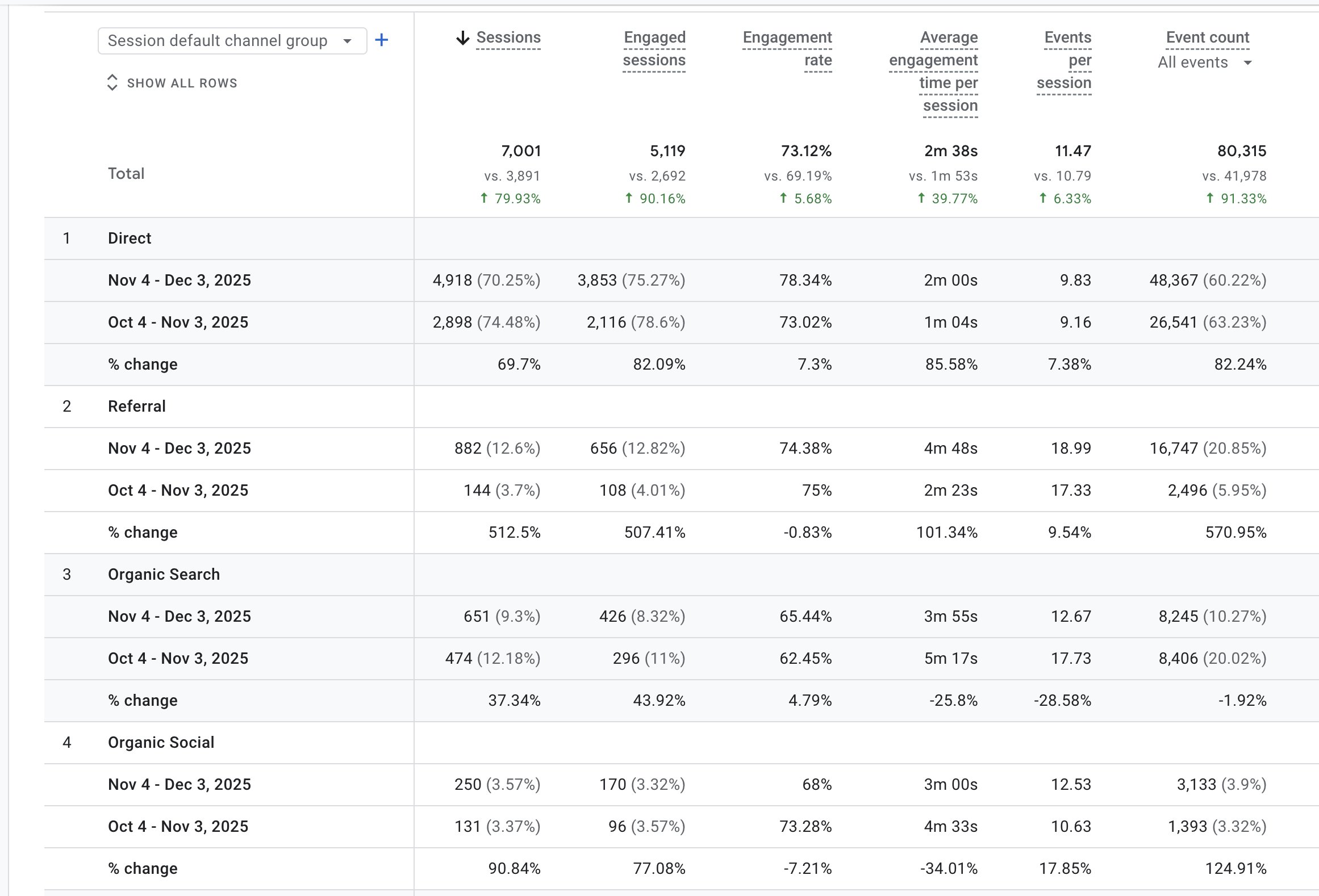
Four-Week Performance Metrics (All Organic)
| Metric | Growth Rate | Impact |
|---|---|---|
| Total Visits | +79.9% | Nearly doubled website traffic |
| Engaged Visits | +90.1% | Improved visitor quality |
| User Interactions | +91.3% | Enhanced engagement depth |
| Direct Traffic | +69.7% | Stronger brand recognition |
| Organic Social | +90.8% | Cross-platform visibility |
| Referral Traffic | +512.5% | Blog and community mentions |
No paid ads involved – just consistent GEO-SEO execution through our multi-agent system.
The 5-Step Multi-Agent Framework
Step 1: Comprehensive Diagnostic Analysis
Our agents conducted a complete SEO + GEO audit before any content creation began3. The systematic diagnosis covered:
- AI Visibility Score assessment
- SEO content structure evaluation
- Missing semantic coverage identification
- Technical gaps (schema, metadata, sitemap, crawlability)
Most brands skip this critical foundation and jump directly to content creation. The WorkFX.ai audit agents identify what requires immediate attention, which topics drive meaningful traffic, and which pages prevent AI engines and Google from properly understanding brand authority.
Step 2: Strategic Content Calendar Development
The brand shifted from random content creation to systematic publishing based on audit findings4. Our content agents generated a scheduled calendar targeting:
- SEO keywords with commercial intent
- GEO topics for AI engine visibility
- Semantic topic clusters filling identified gaps
This transformation changed their approach from “write whatever comes to mind” to “publish pieces that fill semantic and signal gaps.” The methodology proves particularly effective for visual categories like home decor where educational content drives purchase decisions.
WorkFX.ai’s GEO Content Generator Agent automates this entire process, creating optimized content for multiple platforms while ensuring AI-engine compatibility.
Step 3: Multi-Platform Structured Publishing
Our agents deployed structured content across LinkedIn, X, Medium, and the brand’s owned blog5. The system prioritized quality structure over posting frequency, featuring:
- Clear headers and logical information hierarchy
- Consistent reasoning and content structure
- Uniform brand entity signals across platforms
- Cohesive themes that reinforce semantic authority
Structured content purpose-built for GEO and SEO consistently outperforms high-frequency random posting.
Step 4: Technical Infrastructure Optimization
The agent system handled both automated and human-assisted technical improvements6:
Automated by agents:
- Simplified sitemap and robots.txt generation
- Schema markup creation and optimization
- Normalized titles and descriptions
- URL depth reduction strategies
- Page semantics improvement
- Missing metadata identification
Human implementation required:
- .txt file deployment (agents generate files but cannot implement on-site yet)
- Technical validation and testing
These foundational changes create long-term stability rather than overnight traffic spikes. Without proper technical hygiene, even exceptional content fails to achieve deserved visibility.
Step 5: Weekly Execution Flywheel
The multi-agent system operates on consistent weekly cycles, creating compound growth effects7. Rather than focusing on individual channels, the framework improves overall brand structure:
- Direct traffic increase: Enhanced brand clarity and recognition
- Organic search growth: Superior structure and semantic coverage
- Social traffic expansion: Consistent cross-platform presence
- Referral traffic surge: More mentions from blogs, communities, and partners
Why Multi-Agent Systems Outperform Manual Processes
The results stem from calculated strategy execution rather than random optimization efforts8. The systematic approach aligns multiple optimization layers:
- Structured content creation with semantic gap analysis
- Clear semantic coverage with technical SEO hygiene
- Multi-platform publishing with consistent brand entity signals
- AI-friendly formatting optimized for both traditional search and emerging platforms
For Amazon sellers, this creates the exact revenue engine that operates independently of marketplace dependency.
The Replicable 5-Step Workflow
Step 1: Run Comprehensive Audits Identify content, semantic, and technical gaps before creating any content.
Step 2: Build Strategic Content Calendars
Plan high-value themes instead of publishing random posts.
Step 3: Deploy Multi-Platform Publishing Focus on AI-friendly formatting rather than increased posting frequency.
Step 4: Implement Technical SEO Foundations Schema, sitemap, metadata, and structural optimization.
Step 5: Execute Weekly Cycles Consistent implementation creates compounding flywheel effects.
Start building your GEO-SEO workflow today.
FAQ
Q: How quickly can multi-agent systems deliver measurable results? A: Most retail brands see initial improvements within 2-4 weeks, with compound growth accelerating throughout the first month of systematic implementation9.
Q: What makes this approach different from traditional SEO agencies?
A: Multi-agent systems combine GEO optimization for AI engines (ChatGPT, Gemini, Claude) with traditional SEO, while automating content creation, publishing, and technical optimization simultaneously10.
Q: Can other retail categories replicate these results? A: Yes, the multi-agent framework applies across e-commerce verticals, particularly those benefiting from educational content that builds purchase confidence and semantic authority11.
Q: How does WorkFX.ai’s system handle both content and technical optimization? A: WorkFX.ai agents automate audit analysis, content generation, multi-platform publishing, and technical file creation, while providing clear implementation guidance for human-required technical deployment12.
Building Your Own Agent System
The first month of aligning SEO + GEO + content + technical structure into a coherent agentic system delivered exceptional results. For retail brands ready to build similar automated workflows, the systematic approach consistently outperforms sporadic manual optimization.
The key lies in systematic agent deployment rather than attempting to scale manual processes across multiple platforms and technical requirements.
Access Multi-Agent Templates
Ready to implement similar multi-agent systems for your retail brand? Explore WorkFX.ai’s automated GEO-SEO agents: https://www.workfx.ai
References
1: Ahrefs, “124 SEO Statistics for 2024,” 2024. Key finding: “96.55% of all pages get zero search traffic from Google.” https://ahrefs.com/blog/seo-statistics/
2: WorkFX.ai, “Success Stories,” 2025. Case study results: “A $12M e-commerce brand unlocked AI-era traffic without spending on ads: +417% Organic traffic.” https://www.workfx.ai
3: WorkFX.ai, “SEO & GEO Management Agent,” 2025. Audit capabilities: “Competitors data collection and analysis. Keywords and queries research & optimization. Technical SEO optimization.” https://www.workfx.ai
4: Nebulas Design, “E-Commerce SEO Trends for 2024,” 2024. Content strategy: “SEO helps e-commerce businesses attract organic traffic, which can lead to more conversions and sales.” https://www.nebulasdesign.com/seo/e-commerce-seo-trends-for-2024-insights-from-industry-experts/
5: WorkFX.ai, “GEO Content Generator Agent,” 2025. Platform coverage: “Auto-publish to LinkedIn/Reddit/Shopify/X etc. Boost visibility across search and AI engines.” https://www.workfx.ai
6: WorkFX.ai, “How WorkfxAI works,” 2025. Technical process: “Connect Shopify, WordPress, Social Media, CRM, POS/ERP, GA/GSC, etc.” https://www.workfx.ai
7: WorkFX.ai, “FAQ – How long until I see results,” 2025. Timeline: “Most businesses start seeing changes within 2–4 weeks, depending on content quality, site health, and keyword competition.” https://www.workfx.ai
8: Flowlu, “E-commerce Statistics 2025,” 2024. Market context: “Amazon accounted for 37% of all U.S. online sales in 2024.” https://www.flowlu.com/blog/productivity/ecommerce-statistics/
9: WorkFX.ai, “Success Stories – Founder Growth,” 2025. Growth metrics: “A founder grew traffic 40× with consistent content in minutes: +9,133% All organic views.” https://www.workfx.ai
10: WorkFX.ai, “What’s the difference between SEO and GEO?,” 2025. Definition: “SEO improves visibility on Google. GEO (Generative Engine Optimization) improves visibility on AI engines like ChatGPT, Gemini, Claude, Perplexity, and Copilot.” https://www.workfx.ai
11: Canopy Management, “How Amazon Sellers Can Win the SEO Race in 2024,” 2024. E-commerce applications: “increase organic product page visits, conversions.” https://canopymanagement.com/amazon-sellers-win-seo/
12: WorkFX.ai, “GEO Content Generator Agent Features,” 2025. Automation scope: “Generate GEO-optimized posts/images/articles. Tailored content for different platforms.” https://www.workfx.ai
#MultiAgent #GEO #SEO #EcommerceGrowth #AIAgents #RetailAutomation #DigitalMarketing #WorkFXAI #AmazonSellers #OrganicTraffic
Enjoyed this article? Follow us on:
Leave a Reply