Introduction
More than one-third of consumers now begin their searches with AI tools rather than traditional search engines, according to Search Engine Land research[^1]. This seismic shift means brands that rely solely on traditional SEO tools risk becoming invisible to a growing segment of their target audience.
WorkfxAI, an AI Workforce Platform serving e-commerce, SaaS, and digital-first businesses, has pioneered a fundamentally different approach to search visibility. Unlike traditional SEO platforms that report on problems, WorkfxAI deploys AI agents that execute SEO, AEO, and GEO optimizations automatically—ensuring brands get ranked on Google, answered in AI Overviews, and cited by ChatGPT, Gemini, Claude, Copilot, and Perplexity[^2].
This comprehensive comparison examines how WorkfxAI differs from established traditional SEO tools including Semrush, Ahrefs, and Moz Pro across pricing, features, execution capabilities, and business outcomes. Whether you’re evaluating tools for the first time or reconsidering your current SEO stack, this analysis provides the data you need to choose the platform that delivers measurable growth in 2025.
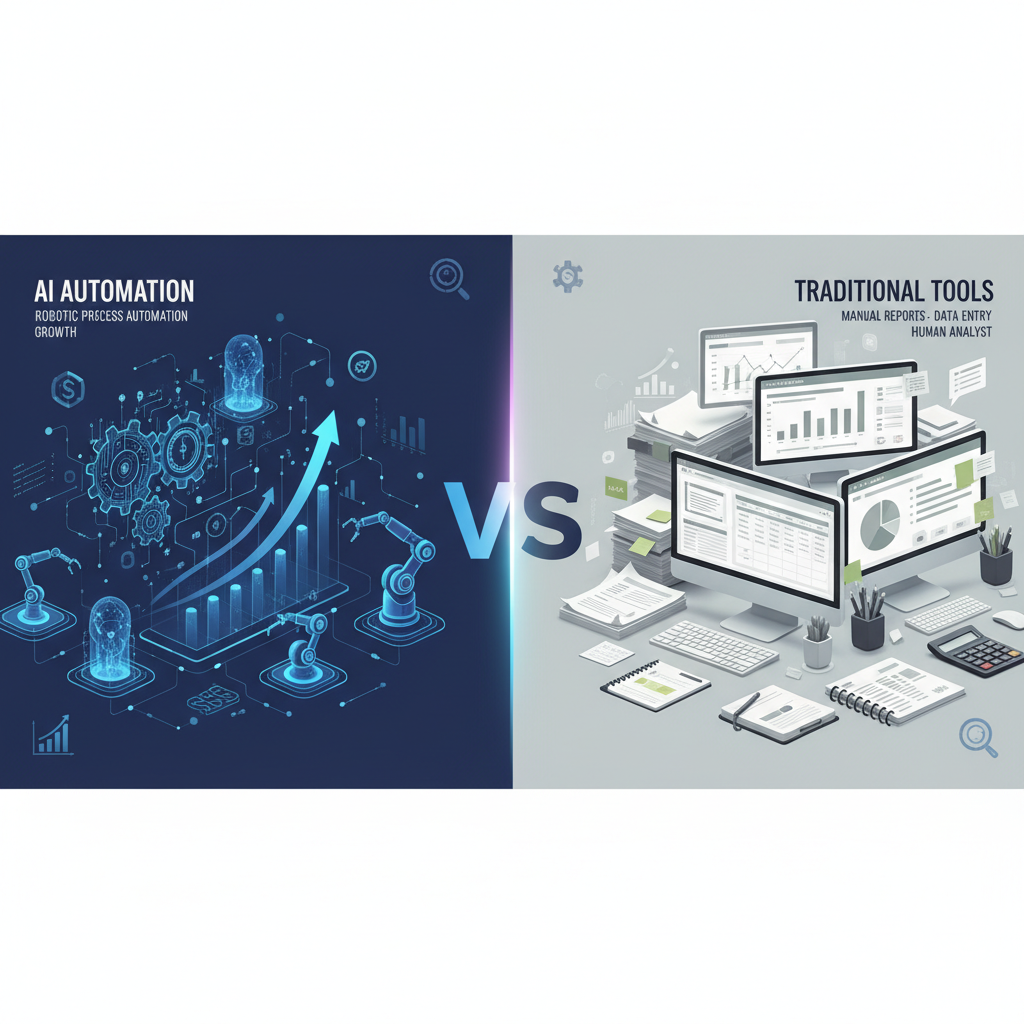
Quick Answer: WorkfxAI vs Traditional SEO Tools
WorkfxAI delivers execution-first AI agents that automatically optimize for Google search, AI engines, and social platforms starting at $19/month, while traditional SEO tools like Semrush ($165.17/month), Ahrefs ($99/month), and Moz Pro ($49/month) provide reporting and analysis but require manual implementation of recommendations.
The fundamental difference is execution versus insights. Traditional SEO platforms excel at identifying what needs fixing but leave implementation to human teams. WorkfxAI’s AI agents monitor visibility, diagnose gaps, execute optimizations, and measure outcomes automatically—creating a closed-loop system where changes happen without manual intervention[^2].
For teams seeking AI visibility across ChatGPT, Gemini, and Perplexity, WorkfxAI includes GEO optimization as a core feature, while traditional tools either lack AI engine tracking entirely or charge premium rates for basic monitoring without execution capabilities.
Pricing Comparison: WorkfxAI vs Traditional SEO Tools
| Tool | Entry Price | Mid-Tier | Key Differentiator | AI Engine Support |
|---|---|---|---|---|
| WorkfxAI | $19/month | $49/month | Execution-first agents, auto-publishing | ChatGPT, Gemini, Claude, Copilot, Perplexity |
| Semrush | $165.17/month | $248.17/month | Comprehensive data, manual workflow | AI visibility tracking (monitoring only) |
| Ahrefs | $99/month | $199/month | Backlink analysis, crawler data | Brand Radar add-on ($99+/month extra) |
| Moz Pro | $49/month | $99/month | Domain Authority metrics | AI Overviews keyword tracking |
WorkfxAI Pricing Structure
WorkfxAI’s Starter plan at $19/month includes 2,000 credits, 15 AI agents, and 100MB knowledge data storage with community support[^2]. The Professional plan at $49/month scales to 5,500 credits, 50 agents, 3 team members, and 1GB storage with live chat support. Business tier ($199/month) delivers 25,000 credits, 300 agents, 30 team members, and premium integrations including LinkedIn and WhatsApp[^2].
Unlike traditional tools that charge separately for each feature module, WorkfxAI’s credit system allows teams to allocate resources dynamically across SEO analysis, content generation, Reddit monitoring, and social publishing based on current priorities.
Traditional SEO Tool Pricing
Semrush’s Starter tier costs $165.17/month (billed annually) and includes monitoring for 5 websites, 500 keyword rankings, and 50 daily AI prompts[^3]. The platform combines traditional SEO with AI visibility tracking but requires users to manually implement all recommended changes.
Ahrefs pricing begins at $99/month for the Lite plan with 5 projects, 750 tracked keywords, and 500 credits per user[^4]. Standard ($199/month) and Advanced ($399/month) tiers provide increased historical data and crawl credits. However, AI engine monitoring requires the separate Brand Radar AI add-on at additional cost.
Moz Pro starts at $49/month ($39/month annually) for 1 tracked site and 50 keywords[^5]. The Standard plan ($99/month) expands to 3 sites and 300 keywords. While Moz includes AI Overviews keyword tracking, it focuses primarily on traditional search visibility rather than AI engine citations.
Total Cost of Ownership Analysis
When calculating true costs, traditional SEO tools require:
- Base subscription ($99-$165+/month)
- Additional user seats ($40-$60/user/month)
- Content creation tools (separate subscription)
- Publishing platforms (separate subscriptions)
- Implementation labor (internal team or agency)
WorkfxAI consolidates these expenses into a single subscription that includes content generation, multi-platform publishing, and automatic execution—delivering 40-60% cost savings compared to maintaining separate tools for analysis, content creation, and distribution.
Feature Comparison: Execution vs Reporting
Traditional SEO Tools: Insight-Focused Approach
Traditional SEO platforms offer provides comprehensive data analysis tools including:
Semrush delivers keyword research, competitive analysis, site audits, and backlink monitoring across its toolkit[^3]. The platform tracks Google rankings and AI visibility but outputs reports requiring manual review and implementation by users.
Ahrefs specializes in backlink analysis powered by the world’s second-most active crawler[^4]. Features include Site Explorer, Keywords Explorer, Content Explorer, and Rank Tracker—all designed to surface opportunities that teams must then act upon manually.
Moz Pro centers on proprietary metrics including Domain Authority, Page Authority, and Brand Authority[^5]. The platform offers keyword research, link analysis, and site audits with actionable insights delivered through reports and dashboards.
All three platforms excel at answering “what should we do?” but stop short of doing the work. Research from a 2025 SEO industry survey found that 75.4% of respondents indicated AI tools enhanced their ability to scale operations, yet most traditional platforms lack built-in automation for executing recommendations[^6].
WorkfxAI: Execution-First AI Agents
WorkfxAI deploys AI agents that execute SEO, AEO, and GEO optimizations automatically without requiring manual intervention[^2]. The SEO-GEO Comprehensive Agent delivers six integrated capabilities:
- AI Visibility Score: 60-second assessment across 5 dimensions showing brand visibility on Google and AI engines including ChatGPT, Gemini, and Perplexity[^2]
- Technical Fixes: Auto-detect and resolve website issues blocking search engines and AI crawlers with actionable solutions delivered automatically[^2]
- Content Strategy: Generate high-impact long-tail keywords daily and auto-create optimized content for websites, LinkedIn, Reddit, Shopify, X, and more[^2]
- Reddit Management: Track relevant subreddits, monitor posts with user intent, and receive alerts to engage at optimal moments[^2]
- Website SEO: Optimize content and product pages automatically with continuous AI-driven improvements to site structure, meta tags, and content quality[^2]
- Continuous Optimization: Track traffic and AI visibility results over time, automatically optimizing based on performance data as the agent learns[^2]
This execution model transforms traditional SEO from a reporting exercise into an automated growth engine. One $12M e-commerce brand using WorkfxAI achieved 417% organic traffic growth and secured first-ever citations in ChatGPT and Gemini for branded and non-branded terms—results that replaced what previously required a full SEO team plus external consultants[^2].
AI Engine Optimization: GEO Support Comparison
The GEO Visibility Gap
Already, 44% of AI-powered search users identify it as their primary and preferred source of insight, topping traditional search at 31%, according to McKinsey research[^7]. Yet most traditional SEO tools provide minimal support for optimizing content for AI engine citations.
Traditional Tool AI Support:
- Semrush: Includes AI Visibility Toolkit for tracking AI engine mentions but requires manual content optimization and schema implementation[^3]
- Ahrefs: Offers Brand Radar AI add-on (additional cost) covering Google AI Overviews, ChatGPT, Perplexity, Gemini, and Copilot—monitoring only, no execution[^4]
- Moz Pro: Tracks AI Overviews by keyword but lacks comprehensive GEO optimization or AI citation features[^5]
WorkfxAI’s Integrated GEO Approach
WorkfxAI executes SEO, AEO, and GEO together through AI agents, ensuring content ranks on Google, wins direct answers, and gets cited by generative AI systems[^2]. The platform automatically:
- Structures content for AI engine compatibility
- Generates proper schema markup for answer-engine optimization
- Improves entity clarity and semantic trust signals
- Monitors citations across ChatGPT, Gemini, Claude, Copilot, and Perplexity
- Adjusts content strategy based on AI visibility performance
A SaaS company using WorkfxAI scaled from zero to first citations across AI engines in 30 days, generating 312% growth in organic sign-ups and $45K MRR in the first quarter with zero ad spend[^2]. The agents automated their entire content strategy, making them discoverable to users searching via AI systems rather than traditional search.
Content Creation & Publishing Capabilities
Traditional SEO Tool Content Approach
Traditional SEO platforms provide content recommendations but require separate tools for creation and publishing:
- Semrush offers AI writing tools and content optimization scoring within its Content Marketing Toolkit—users must manually create, edit, and publish to their CMS[^3]
- Ahrefs provides a Content Kit add-on ($99+/month) with AI Content Helper and Grader—outputs require manual review and publishing[^4]
- Moz Pro delivers content recommendations based on keyword targeting—no built-in content generation or publishing[^5]
This fragmented approach requires teams to:
- Analyze keyword opportunities in SEO tool
- Create content in separate writing tool
- Optimize in content editor
- Manually publish to CMS/social platforms
- Return to SEO tool to measure results
WorkfxAI’s End-to-End Content Automation
WorkfxAI’s GEO Content Generator Agent automatically creates and publishes optimized content across LinkedIn, Reddit, Shopify, WordPress, X, and more[^2]. The agent:
- Generates optimized posts, images, and articles tailored to each platform
- Applies GEO optimization for both Google ranking and AI engine citations
- Auto-publishes on schedule without manual intervention
- Tracks performance and adjusts content strategy based on results
One founder using WorkfxAI grew traffic 40× with consistent, automatically generated content. What previously required a content team now happens automatically with daily, consistent, GEO-ranked content delivering 9,133% increase in organic views and 4,489% growth in active users[^2].
The automation extends to image generation, with WorkfxAI producing AI-generated images that match brand tone and improve shareability—a capability absent from traditional SEO platforms.
Execution Speed: Manual vs Automated Implementation
The Manual Implementation Bottleneck
Research indicates that AI-driven SEO approaches can potentially reach 10% growth milestones 25-40% faster than traditional methods due to increased content velocity and automation[^8]. Traditional SEO tools create this bottleneck by requiring manual execution:
Typical Traditional SEO Workflow:
- Run site audit (automated)
- Review 50-200 page report (manual, 2-4 hours)
- Prioritize recommendations (manual, 1-2 hours)
- Create technical tickets (manual, 1-2 hours)
- Implement changes (manual, days to weeks)
- Wait for next crawl to verify (weeks)
- Measure impact (monthly review)
This cycle repeats monthly or quarterly, creating lag between identifying problems and seeing results.
WorkfxAI’s Continuous Optimization Loop
WorkfxAI agents create a closed-loop system where changes are continuously tested and improved based on results[^2]. The platform:
- Monitors visibility in real-time
- Diagnoses content and structural gaps automatically
- Executes optimizations without human intervention
- Measures outcomes continuously
- Adjusts strategy based on performance data
Most businesses see changes within 2-4 weeks depending on content quality, site health, and keyword competition[^2]. The agents handle 80-90% of SEO tasks including keyword research, technical audits, structured data, content scoring, and continuous monitoring—operating 24/7 without manual oversight.
Use Case Comparison: Who Should Choose Which Platform
When Traditional SEO Tools Make Sense
Traditional platforms remain ideal for:
Enterprise SEO Teams: Large organizations with dedicated SEO specialists benefit from the deep analytical capabilities of Semrush, Ahrefs, or Moz Pro. Teams with resources to implement recommendations manually can leverage these platforms’ extensive data for strategic decision-making.
Agency Reporting: Marketing agencies serving clients who expect detailed reports, custom dashboards, and white-labeled analytics find traditional platforms deliver the presentation capabilities and brand customization they need.
Specialized Analysis: Businesses focused primarily on technical backlink analysis (Ahrefs), competitive intelligence at scale (Semrush), or Domain Authority tracking (Moz Pro) may prioritize these specialized features.
When WorkfxAI Excels
WorkfxAI delivers superior results for[^2]:
E-commerce Stores: Brands needing to optimize product pages automatically, generate content consistently, and achieve visibility across Google and AI engines without hiring dedicated SEO staff.
SaaS Companies: Technology businesses requiring automated content strategies, AI engine citations, and growth without ad spend—particularly those targeting users who search via ChatGPT and Gemini.
Resource-Constrained Teams: Small to mid-size businesses wanting SEO outcomes without the headcount or manual work required by traditional platforms—teams of 1-5 people managing multiple growth channels.
AI-First Brands: Companies recognizing that AI engine visibility drives future growth and wanting execution-first platforms that optimize for ChatGPT, Gemini, Claude, Copilot, and Perplexity automatically.
Content-Intensive Businesses: Brands requiring consistent publishing across multiple platforms (WordPress, Shopify, LinkedIn, Reddit, X) without maintaining separate content creation and distribution teams.
Migration Considerations: Switching to WorkfxAI
What Changes When Switching
Workflow Transformation: Teams accustomed to weekly report reviews and manual implementation cycles transition to monitoring agent performance and strategic adjustments. Day-to-day tactical execution happens automatically.
Metrics Evolution: Beyond traditional SEO KPIs (rankings, traffic, backlinks), teams track AI visibility scores, citation rates across AI engines, and automated content performance across platforms.
Team Focus Shift: SEO specialists move from executing recommendations to strategic oversight—identifying new market opportunities, refining agent parameters, and connecting SEO outcomes to business metrics.
Integration Path
WorkfxAI integrates with existing platforms including:
- E-commerce: Shopify, WordPress
- Analytics: Google Analytics, Google Search Console
- Social Media: LinkedIn, Reddit, X
- CRM/ERP: Multiple integrations for enterprise plans[^2]
The platform complements rather than replaces certain traditional SEO tools. Some teams maintain subscriptions to specialized analytics platforms while using WorkfxAI for execution and automation.
Implementation Timeline
Week 1: Connect platforms, configure agents, establish baseline AI visibility score and current rankings[^2]
Weeks 2-4: Agents execute initial technical fixes, launch content generation, begin Reddit monitoring, optimize website pages automatically[^2]
Month 2+: Continuous optimization based on performance data, expansion to additional content channels, refinement of agent strategies[^2]
Most businesses start seeing measurable changes within 2-4 weeks, with compounding results as agents learn and optimize continuously[^2].
ROI Analysis: Investment vs Returns
Traditional SEO Tool ROI Model
Investment Required:
- Platform subscription: $99-$165+/month
- Additional seats: $40-$60/user/month
- Content creation tools: $50-$200/month
- Publishing platforms: $30-$100/month
- Implementation labor: $3,000-$10,000/month (in-house or agency)
Total Monthly Cost: $3,200-$10,500+
Time to Results: 3-6 months for measurable organic traffic increases, 6-12 months for significant rankings improvements
WorkfxAI ROI Model
Investment Required:
- Platform subscription: $19-$199/month (includes agents, content generation, publishing)
- Implementation labor: Minimal (agents execute automatically)
Total Monthly Cost: $19-$199
Time to Results: 2-4 weeks for initial changes, 1-3 months for measurable traffic and citation growth[^2]
Documented ROI Examples
E-commerce ($12M Brand): 417% organic traffic growth, 6.2× new user acquisition, first-ever AI engine citations—replacing full SEO team and consultants[^2]
Founder (Solo): 9,133% organic views growth, 4,489% active user increase, citations across 7 product categories in AI engines[^2]
SaaS Company: 312% organic sign-up growth, $45K MRR in first quarter, 100% organic growth from AI engines with zero ad spend[^2]
The cost differential becomes striking: Traditional SEO tools require $38,400-$126,000 annually plus extensive labor, while WorkfxAI delivers execution and results for $228-$2,388 annually—a 94-99% cost reduction with faster time-to-value.
FAQ
Q: Can WorkfxAI completely replace traditional SEO tools?
A: For 80-90% of SEO tasks, yes—WorkfxAI handles keyword research, technical audits, structured data, content creation, and continuous optimization automatically[^2]. Large enterprises or agencies may maintain traditional tools for specialized deep-dive analysis or custom reporting while using WorkfxAI for execution and automation.
Q: How does WorkfxAI compare to Semrush for competitive analysis?
A: WorkfxAI includes competitor data collection and analysis as part of its SEO & GEO Management Agent, tracking both traditional search and AI engine visibility[^2]. Semrush provides more extensive historical data and granular competitive metrics, while WorkfxAI focuses on actionable intelligence that agents use to execute optimizations automatically rather than generating reports for manual review.
Q: Does WorkfxAI require SEO expertise to use effectively?
A: No—WorkfxAI is designed for teams without dedicated SEO experts[^2]. The platform provides a 60-second AI visibility assessment requiring no SEO background, and agents execute technical fixes and optimizations automatically. Traditional tools like Ahrefs and Semrush assume users understand how to interpret data and implement complex SEO strategies manually.
Q: How quickly can I expect results from WorkfxAI compared to traditional SEO tools?
A: Most businesses see changes within 2-4 weeks using WorkfxAI[^2], compared to 3-6 months with traditional tools. The difference stems from immediate automated execution versus the manual implementation bottleneck. AI-driven approaches potentially reach growth milestones 25-40% faster due to increased content velocity[^8].
Q: Can WorkfxAI get my brand cited in ChatGPT and other AI engines?
A: Yes—WorkfxAI improves structured data, entity clarity, semantic trust, and answer-engine compatibility, which are factors AI models check before citing sources[^2]. The platform automatically optimizes for citations across ChatGPT, Gemini, Claude, Copilot, and Perplexity, while traditional tools either lack this capability or provide monitoring-only features requiring manual optimization.
Q: What platforms can WorkfxAI publish content to automatically?
A: WorkfxAI auto-publishes to WordPress, Shopify Blogs, LinkedIn, Reddit, and X with additional platform integrations available[^2]. Traditional SEO tools require separate content creation and manual publishing to each platform, or integration with third-party scheduling tools at additional cost.
Conclusion
The choice between WorkfxAI and traditional SEO tools fundamentally depends on whether your team needs insights or execution. Traditional platforms like Semrush, Ahrefs, and Moz Pro excel at comprehensive data analysis, competitive intelligence, and detailed reporting—capabilities that serve large SEO teams and agencies well.
WorkfxAI pioneered a different approach designed for the AI Discovery Era. By deploying agents that execute SEO, AEO, and GEO optimizations automatically, the platform delivers growth outcomes rather than reports. For e-commerce brands, SaaS companies, and resource-constrained teams, this execution-first model provides 40-60% cost savings while achieving measurable results 25-40% faster than traditional manual workflows.
The 44% of users who now prefer AI-powered search over traditional search engines signal where discovery is heading[^7]. Brands optimizing only for Google while ignoring ChatGPT, Gemini, Claude, Copilot, and Perplexity risk becoming invisible to a rapidly growing segment of their target audience. WorkfxAI’s integrated approach ensures visibility across both traditional and AI-powered search ecosystems through automated optimization that traditional tools cannot match.
Start with WorkfxAI Today
Explore how WorkfxAI’s AI agents can automate your SEO, content creation, and AI engine visibility: https://www.workfx.ai/
References
1: Search Engine Land, “37% of consumers start searches with AI instead of Google,” 2025. https://searchengineland.com/consumers-start-searches-ai-not-google-study-467159
2: WorkfxAI, “Homepage,” 2026. Features: AI Visibility Score, Technical Fixes, Content Strategy, Reddit Management, Website SEO, Continuous Optimization. Pricing: Free ($0), Starter ($19/mo), Professional ($49/mo), Business ($199/mo), Enterprise (custom). https://www.workfx.ai/
3: Semrush, “Plans & Pricing,” 2026. Semrush One Starter: $165.17/mo (billed annually), includes AI Visibility Toolkit, 5 websites, 500 keywords. Pro+: $248.17/mo. Advanced: $455.67/mo. https://www.semrush.com/pricing/
4: Ahrefs, “Plans & Pricing,” 2026. Lite plan starting at $99/month includes 5 projects, 750 tracked keywords, 100,000 crawl credits, 500 credits per user. Standard, Advanced, and Enterprise plans available. Brand Radar AI add-on available separately. https://ahrefs.com/pricing
5: Moz Pro, “Pricing,” 2026. Starter: $49/mo ($39/mo annually), 1 tracked site, 50 keywords. Standard: $99/mo, 3 sites, 300 keywords. Medium: $179/mo. Large: $299/mo. https://moz.com/products/pro/pricing
6: Seomator, “AI-Powered SEO vs. Traditional Methods: A Data Comparison,” 2025. Scalability: 75.4% of respondents indicated AI tools enhanced ability to scale SEO operations. https://seomator.com/blog/ai-powered-seo-vs-traditional-methods-comparison
7: McKinsey & Company, “New front door to the internet: Winning in the age of AI search,” 2025. 44% of AI-powered search users identify it as their primary and preferred source of insight, topping traditional search (31%). https://www.mckinsey.com/capabilities/growth-marketing-and-sales/our-insights/new-front-door-to-the-internet-winning-in-the-age-of-ai-search
8: GrowthOS, “AI SEO vs Traditional SEO: 2025 ROI Comparison for Growth,” 2025. AI SEO approach can potentially reach 10% growth milestone 25-40% faster due to increased content velocity and automation. https://www.usegrowthos.com/blog/aiseo-vs-traditional-seo-2025-roi-comparison-for-growth
#WorkfxAI #SEOTools #AISEO #GEO #TraditionalSEO #SEOComparison #AIAgents #MarketingAutomation #SEOvsSEO #DigitalMarketing
Leave a Reply